
Purpose-built for how your profession works
Book a Demo (Accounting)
Simply fill in your details and we will be in touch soon to arrange a personalised demonstration .

Stop switching tools. Thousands of accountants run on one platform.
From searches and verifications to entity information, compliance and smarter workflows, InfoTrack brings the services accounting professionals use every day together in one place.
- Tax, accounting & bookkeeping
- Insolvency & restructuring
Tax, accounting & bookkeeping
Whether you’re a tax agent, BAS agent, accountant, bookkeeper, sole practitioner or part of a small practice, Tranche 2 may apply when you provide certain designated services.
This can include directly assisting with company or trust formation, facilitating client transactions, or managing client funds. Where obligations apply, practices may need to consider customer identification, ownership and control, risk assessment and ongoing due diligence.
InfoTrack solutions
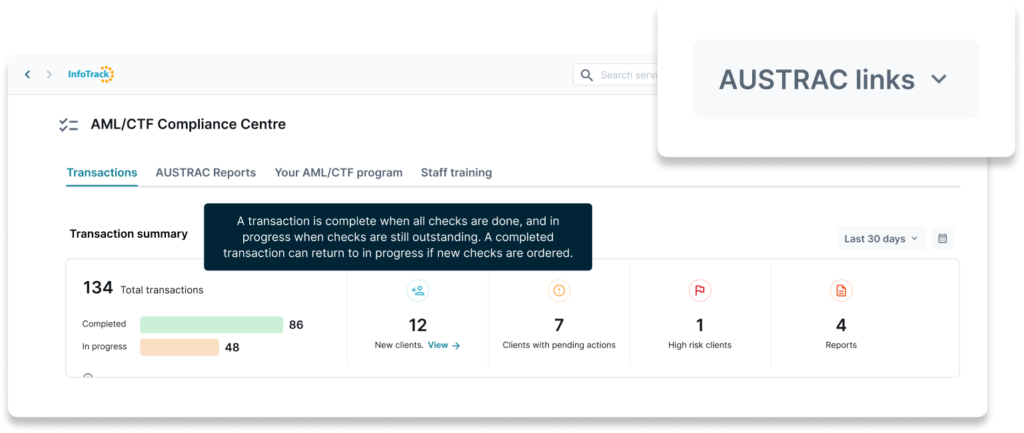
- AML/CTF Compliance solution to support customer due diligence and compliance requirements, with pay-per-search pricing.
- Create companies, establish trusts and manage stamping in one connected workflow.
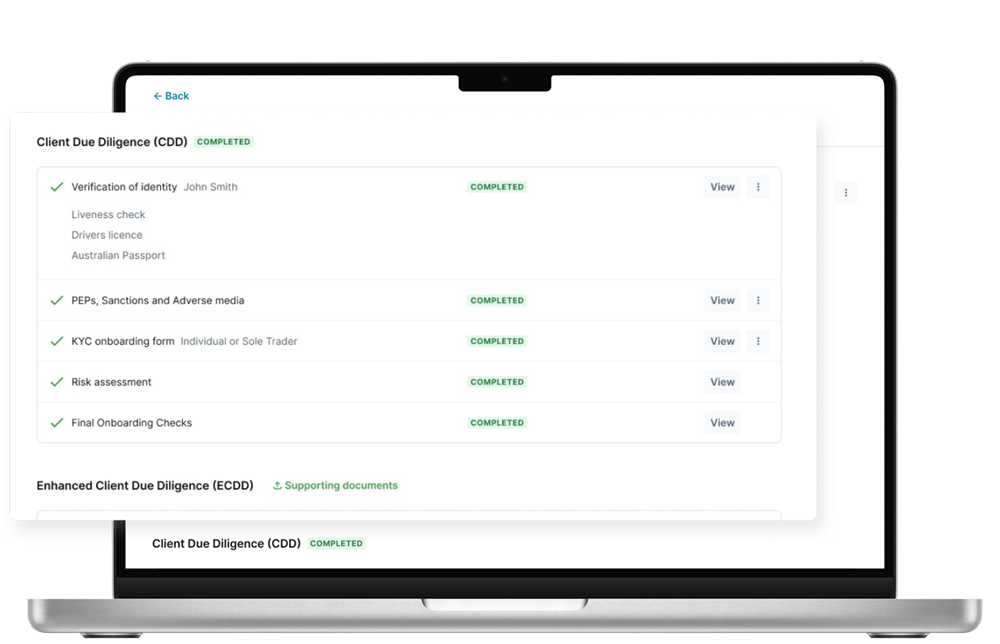
- Combine VOI, AML/CTF and other due diligence checks in one workflow.
- Access ASIC, PPSR and Title Searches, including property searches for SMSF audits, from one platform.
- Designated Services Checker to help understand whether your activities may fall within the AML/CTF framework.
- InfoTrack’s Entity Edge to monitor ownership, directors and status changes for relevant entities.
Insolvency & restructuring
Whether you’re a voluntary administrator, receiver, liquidator or bankruptcy trustee, Tranche 2 may introduce new AML/CTF obligations depending on the designated services you provide. This can include activities involving company funds, restructuring, transactions or the sale and transfer of assets. Where obligations apply, practitioners may need to consider customer identification, ownership and control, risk assessment and ongoing due diligence.
AUSTRAC’s guidance provides greater clarity on how these obligations can apply to insolvency practitioners, whether acting personally or through their company.
InfoTrack solutions
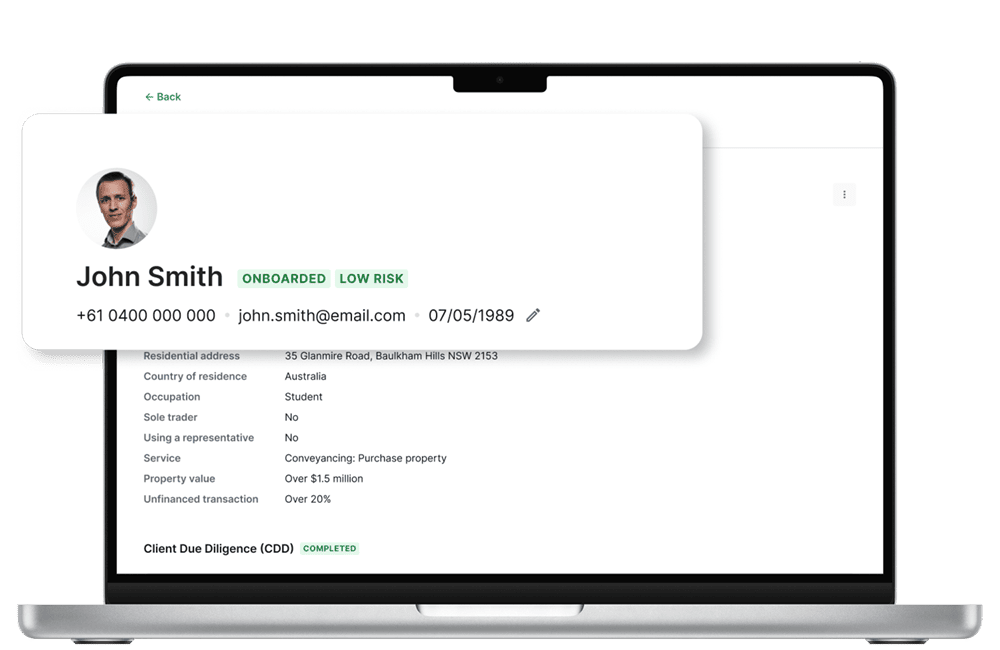
- AML/CTF Tranche 2 Compliance solution to manage customer due diligence, including identity, ownership and control checks, PEP and sanctions screening, with an auditable record. All within the same platform as your pre- and post-appointment searches, with pay-per-search pricing.
- Supports every major trust type: Set up the right trust for your client, including discretionary, unit, bare, or superannuation, all in one place.
- Confidence through legal verification: All documentation is built and checked by legal professionals, reducing risk and errors.
- Stamping made simple: as part of the same workflow, complete national trust stamping and New South Wales EDR stamping – capabilities few providers offer.
- Timesaving solution: Automated workflows reduce manual handling and speed up complex structures.
- Built for accountants: Part of InfoTrack’s broader technology ecosystem, designed to support modern, efficient practices and enhance your client service.
- 1. Enrol with AUSTRAC
- 2. Onboard your firm and people
- 3. Onboard your customers
- 4. Report to AUSTRAC
- 5. Record Keeping
Get started with solutions built for your practice
See how compliance, due diligence and company information come together in one workflow
Book a Demo (Accounting)
Simply fill in your details and we will be in touch soon to arrange a personalised demonstration .
Webinars
Frequently Asked Questions
Tranche 2 is the current phase of AML/CTF regulatory obligations in Australia, which commenced on 1 July 2026. It expands compliance requirements to cover additional professionals and activities that were not fully included under Tranche 1, including certain property transactions, complex client onboarding, and reporting obligations when handling client money. Professionals captured under Tranche 2 include lawyers, conveyancers, accountants, and real estate agents involved in these activities.
It may, if you provide certain services such as helping set up companies or trusts, providing a registered address, managing client funds, or a range of other transactions. Where it applies, you will need to check client identity and PEP or sanctions status, understand who owns and controls the entity, and assess risk on an ongoing basis.
It may, depending on the services you provide, such as handling company funds, selling real estate, restructuring, or selling and transferring assets. AUSTRAC has published guidance on how these obligations apply to insolvency work.
Use InfoTrack’s Designated Services Checker here. It walks you through your activities and tells you whether Tranche 2 obligations may apply.
It handles customer due diligence and Tranche 2 compliance more broadly for your firm, covering identity checks, ownership and control checks, and PEP and sanctions screening, with an auditable record kept for every check. You only pay for the searches you run.
Typically, yes. Being appointed is not itself a designated service, so there is generally a gap between appointment and providing a designated service, such as selling real estate or managing funds, during which AML screening can be run and disbursed post-appointment.
Yes. Create companies, establish trusts and manage stamping in one workflow, with VOI and AML/CTF checks built in.
ASIC, PPSR and title searches, including property searches for SMSF audits, alongside pre- and post-appointment searches. InfoTrack has thousands of different searches available in the one place.
Entity Edge monitors ownership, directors and status changes, and lets you know when something changes.
Automated workflows cut down manual handling, especially on matters involving multiple entities or trusts, so your team spends less time on repetitive checks and more time on the client.